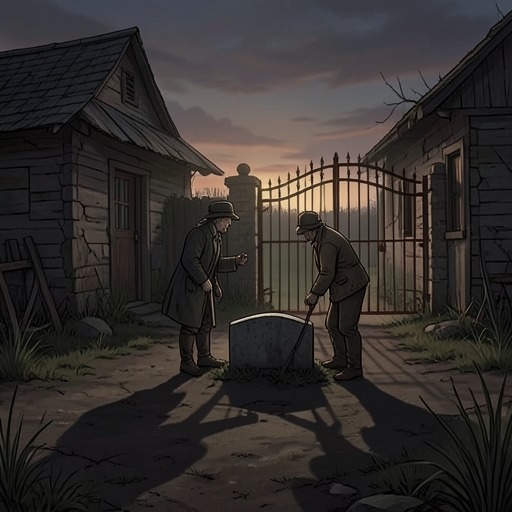
William Stepson murder
Killers of the Flower MoonThe William Stepson murder was a suspected poisoning in 1922 that authorities never prosecuted, despite later evidence implicating Kelsie Morrison. The killing was tied to an effort to gain control of the Stepson family’s wealth: Morrison was believed to have murdered William, married his widow, Tillie, and taken charge of her children and estate. The consequences reached beyond the two deaths, as the children themselves became the subject of a later plan to seize their inheritance.
The killing and its alleged motive
William Stepson, a steer-roping champion, died in 1922 of suspected poisoning. Authorities came to believe that Morrison, who had killed Anna Brown, was responsible. An associate told the Bureau that Morrison had admitted killing Stepson so he could marry Tillie and obtain control of her valuable estate. Morrison had divorced his Osage wife by 1922; after Stepson’s death, he married Tillie and became guardian of her two children.
The reported motive made the marriage part of the alleged crime’s financial design. Stepson’s death removed Tillie’s husband; marriage then gave Morrison access to her household and a position of authority over her children’s interests. The account presents this as an accusation relayed by an associate, not as a finding established in court.
Tillie’s death and the failure to investigate
Tillie grew suspicious of Morrison, particularly after he was overheard discussing the effects of strychnine. She told her lawyer that she wanted to prevent Morrison from inheriting her estate and to end his guardianship of her children. In July 1923, before she had made those changes, Tillie also died of suspected poisoning. Her death was never investigated, while Morrison took much of her fortune.
The suspicion surrounding Tillie’s death was reinforced by another associate’s account: Morrison admitted to him that he had killed her. The account also records Morrison asking why the associate did not take an Indigenous woman and do the same. These reported admissions deepen the pattern surrounding the Stepson family, but neither death resulted in a prosecution for the alleged crime.
The children and the continuing threat
Tillie’s death left her three-year-old son, Marvin’s father, and his nine-year-old half sister vulnerable to the loss of their inheritance. In 1926, while imprisoned for killing Anna Brown, Morrison sent a note to William K. Hale about the children. He wrote that they would soon have two or three hundred thousand dollars, noted that he had adopted them, and asked how he could obtain possession or control of their money after his release. He also contemplated taking them out of the state, believing that he could not be prosecuted for kidnapping.
Guards intercepted the note. Those who learned of it feared Morrison intended to kill both children, though the account does not establish that such a plan was carried out. The threat shows how the alleged effort to capture the Stepson estate persisted after both William and Tillie were dead: the children remained at risk because of the wealth left in their names.
Exposure and lasting consequence
Decades later, Marvin Stepson, William’s grandson and an Osage trial court judge, had spent years researching what happened to his grandparents. He said that Morrison murdered both of them and left his father an orphan. His testimony brings the family’s loss into view not merely as two suspected poisonings, but as a sequence in which the deaths, the theft of Tillie’s fortune, and the danger to the children were connected by the struggle over an estate.
The case also illustrates the distance between suspicion and legal accountability. Authorities believed Morrison had killed William, and accounts attributed admissions to him concerning both William and Tillie, yet no one was prosecuted for William’s murder and Tillie’s death was not investigated. The family’s history, recovered through later research and an intercepted prison note, preserved details that the official response had left unresolved.